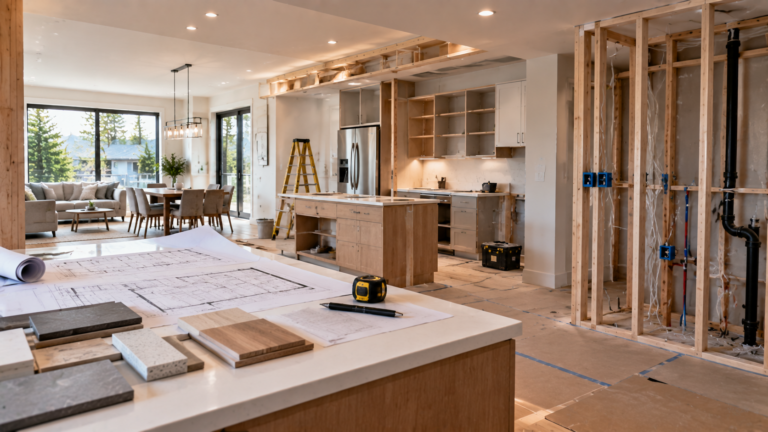

Vancouver Home Renovation Mistakes to Avoid Before Starting | WGC
Vancouver Home Renovation Mistakes to Avoid Before Starting
A renovation can look straightforward from the outside.
Choose a design. Hire a contractor. Start construction.
In reality, the difficult decisions often happen before the first day on site.
The most common Vancouver home renovation mistakes involve incomplete planning, unrealistic budgets, unclear project scope, late material selections, overlooked existing conditions, and poor communication. Homeowners can reduce avoidable problems by assessing the property first, defining priorities, understanding permit requirements, making key selections early, and choosing a contractor who explains the construction process clearly.
Good preparation does not guarantee that nothing unexpected will happen.
It does make unexpected problems easier to manage.
Mistake 1: Starting Construction Before Defining the Scope
A renovation should have a clear scope before demolition begins. Homeowners should know which rooms are being changed, what systems are being upgraded, what finishes are included, and which items are outside the project.
A vague scope can lead to:
- Budget confusion
- Design changes
- Scheduling problems
- Disagreements about included work
For example, “renovate the kitchen” could mean replacing cabinets and countertops.
Or it could mean:
- Removing walls
- Moving plumbing
- Rewiring the room
- Replacing flooring
- Upgrading ventilation
- Installing new lighting
- Reconfiguring the entire layout
Those are very different projects.
Mistake 2: Choosing a Design Before Understanding the Existing Home
Existing conditions should influence renovation design. Older Vancouver homes may contain structural, electrical, plumbing, moisture, or mechanical conditions that are not obvious during an initial walkthrough.
Before finalizing a major design, consider:
- Structural framing
- Electrical capacity
- Plumbing routes
- Heating and ventilation
- Moisture conditions
- Existing floor levels
- Previous renovations
A design that ignores the existing house can become expensive to change later.
Mistake 3: Setting a Budget Without Defining Priorities
A renovation budget works best when homeowners separate essential work from preferred upgrades. This helps the contractor understand where money should be protected and where substitutions may be possible.
A useful framework is:
Priority | Examples | Planning Approach |
| Essential | Structural or moisture issues | Address first |
| Functional | Layout, storage, electrical | High priority |
| Comfort | Heating, lighting, insulation | Consider early |
| Finish | Tile, hardware, decorative details | Adjust if needed |
| Optional | Specialty features | Add if budget allows |
This gives the project direction.
Without priorities, every decision can become a budget debate.
Mistake 4: Focusing on Finishes Before Construction
Homeowners naturally pay attention to countertops, flooring, cabinets, tile, and fixtures. Those choices matter, but hidden construction work should usually be understood first.
Before spending heavily on finishes, review:
- Structure
- Waterproofing
- Plumbing
- Electrical
- Insulation
- Ventilation
A beautiful bathroom with poor waterproofing is not a successful renovation.
A beautiful kitchen with an inefficient layout is not a successful renovation either.
Mistake 5: Ignoring Permit Requirements
Permit requirements depend on the work being proposed and the jurisdiction. Vancouver homeowners should determine whether planned structural, plumbing, electrical, gas, or other regulated work requires approvals before construction begins.
Do not assume that because a renovation is inside the house, it automatically avoids permits.
Questions to ask include:
- Does the project change structural walls?
- Are rooms being added or reconfigured?
- Is plumbing moving?
- Is electrical work changing?
- Is an addition being built?
- Are other regulated systems affected?
Permit planning should happen early.
Mistake 6: Assuming Every Renovation Has the Same Timeline
A bathroom renovation, kitchen renovation, basement conversion, and whole-home renovation can have very different schedules. Project duration depends on scope, existing conditions, design decisions, materials, approvals, trade coordination, and inspections.
Project | Typical Complexity |
| Cosmetic Update | Lower |
| Bathroom Renovation | Moderate |
| Kitchen Renovation | Moderate to High |
| Basement Renovation | Moderate to High |
| Full Home Renovation | High |
| Home Addition | High |
A contractor should be able to explain the major stages of the schedule.
Mistake 7: Making Material Decisions Too Late
Material selections can affect both budget and schedule. Cabinets, countertops, windows, specialty fixtures, flooring, and appliances may require ordering or fabrication before installation.
A simple sequence looks like:
Select → Confirm → Order → Receive → Install
If the first step happens late, the last step moves too.
Homeowner Tip
Make major selections early, especially:
- Cabinets
- Appliances
- Windows
- Plumbing fixtures
- Tile
- Flooring
- Specialty lighting
Mistake 8: Changing the Plan After Construction Starts
Some changes are unavoidable. Others are preventable. Changing a layout after demolition can affect several trades and may require completed work to be removed or redesigned.
For example, moving a bathroom vanity may affect:
- Plumbing
- Electrical
- Cabinetry
- Countertop
- Mirror
- Lighting
One small request can become a chain reaction.
Before construction begins, review the plan carefully.
Mistake 9: Choosing the Lowest Quote Without Comparing Scope
A lower renovation quote does not necessarily represent a lower total project cost. Homeowners should compare what each contractor has actually included rather than comparing only the headline number.
Review:
- Scope of work
- Materials
- Labour
- Permit responsibilities
- Trade work
- Allowances
- Exclusions
- Change-order procedures
A useful question is:
“What is included in this price, and what is not?”
Mistake 10: Not Asking How Unexpected Problems Will Be Handled
Renovating an existing home involves uncertainty. Homeowners should understand before construction begins how unexpected conditions, additional work, and changes will be documented and approved.
Possible examples include:
- Hidden moisture damage
- Unexpected framing
- Old wiring
- Plumbing problems
- Previous unplanned alterations
A clear process might involve:
- Identify the issue.
- Document the condition.
- Explain the required work.
- Explain the cost or schedule effect.
- Obtain approval where required.
- Complete the work.
That is much easier than discovering the issue through an unexplained invoice.
Mistake 11: Forgetting About Electrical Planning
Modern homes place greater demands on electrical systems than many older homes were originally designed to handle. Renovations are an opportunity to plan outlets, lighting, appliances, and future technology before walls are closed.
Think about:
- Kitchen appliances
- Home offices
- Lighting
- Entertainment systems
- Charging locations
- Smart home equipment
Do not wait until drywall is installed to ask where the outlets should go.
Mistake 12: Underestimating Storage
Storage should be part of the floor plan, not an afterthought. This is particularly important in Vancouver homes where available floor area may be limited.
Consider:
- Full-height cabinets
- Built-in shelving
- Pantry storage
- Under-stair storage
- Bathroom cabinetry
- Entryway storage
A renovation should improve the way the home functions.
Storage is part of that.
Mistake 13: Designing Only for Today
A renovation can be more useful when homeowners consider how the space may be used several years from now. Flexible design can help rooms adapt as family, work, mobility, and lifestyle needs change.
For example:
A home office could later become:
- A guest room
- A child’s study
- A hobby room
A basement could become:
- Family space
- Guest accommodation
- Home office
- Secondary suite, where permitted
Think beyond the immediate renovation.
Mistake 14: Ignoring Ventilation and Moisture
Moisture management and ventilation deserve early attention, especially in bathrooms, basements, kitchens, and other areas exposed to humidity. Finishing a space before addressing underlying moisture conditions can create expensive problems later.
Pay particular attention to:
- Basement walls
- Bathrooms
- Kitchens
- Window areas
- Exterior walls
The visible finish is only one layer of the renovation.
Mistake 15: Not Planning How You Will Live During Construction
A renovation can disrupt everyday routines, particularly when kitchens, bathrooms, bedrooms, or multiple living areas are affected. Homeowners should discuss site access, work hours, temporary facilities, storage, and household arrangements before construction starts.
Ask:
- Which rooms will be unavailable?
- Will water or electricity be interrupted?
- Where will materials be stored?
- How will the site be protected?
- Can the family remain in the house?
This is not a minor detail.
It affects the entire renovation experience.
Vancouver Renovation Mistakes: A Pre-Construction Checklist
Before construction starts, homeowners should confirm the project scope, budget priorities, design decisions, permit responsibilities, material selections, schedule expectations, communication process, and treatment of unexpected conditions.
Before Signing
- Define the renovation scope.
- Identify essential repairs.
- Review the contractor’s quote.
- Understand exclusions.
- Confirm permit responsibilities.
- Discuss the expected schedule.
Before Demolition
- Approve the final layout.
- Confirm major materials.
- Confirm appliances.
- Review electrical requirements.
- Review plumbing changes.
- Discuss site access.
- Establish communication procedures.
Before Construction
- Confirm who coordinates trades.
- Understand change procedures.
- Confirm material ordering.
- Discuss unexpected existing conditions.
- Establish how progress will be communicated.
What Should You Ask a Vancouver Renovation Contractor?
The right questions can help homeowners understand how a contractor plans and manages the project before construction begins.
Ask:
- What problems do you see with the existing home?
- Which parts of the project require permits?
- What is included in the quote?
- What is excluded?
- Which materials need to be selected early?
- What could affect the schedule?
- How are unexpected conditions handled?
- Who coordinates the trades?
- How are changes approved?
- How will I receive project updates?
Good contractors should be comfortable answering practical questions.
Contractor Perspective: The Most Expensive Mistakes Usually Start Early
From a contractor’s perspective, many costly renovation problems begin with decisions made before construction. An unclear scope, late material selection, unrealistic schedule, or poorly understood existing condition can create additional work once the project is underway.
That is why planning deserves real attention.
The first few decisions can influence everything that follows.
How to Reduce Renovation Risk Before Construction
Homeowners cannot eliminate every construction surprise, but they can reduce avoidable risk by preparing properly and working with a contractor who communicates clearly.
A practical approach is:
1. Assess
Understand the existing home.
2. Define
Determine what the renovation must accomplish.
3. Design
Create a workable layout.
4. Budget
Separate essential work from optional upgrades.
5. Approve
Confirm drawings, materials, and project scope.
6. Build
Follow the planned construction sequence.
7. Review
Address inspections, deficiencies, and final details.
How Walker General Contractors Approaches Home Renovations
Walker General Contractors approaches Vancouver home renovations with an emphasis on practical planning, coordinated construction, and clear communication.
Depending on the project, renovation work can involve:
- Kitchen renovations
- Bathroom renovations
- Basement renovations
- Home additions
- Full-home renovations
- Custom construction
The right renovation plan starts with the actual home.
Not a generic template.
Not a showroom.
The existing structure, homeowner goals, project scope, and construction requirements all need to work together.
Frequently Asked Questions
What is the biggest mistake homeowners make before a renovation?
One common problem is starting without a sufficiently clear scope. If homeowners and contractors have different expectations about what is included, budget and schedule problems can follow.
How can I avoid unexpected renovation costs?
You cannot eliminate every unexpected condition in an existing home. You can reduce avoidable surprises by assessing the property, defining the scope clearly, understanding exclusions, and discussing how unforeseen work will be handled.
Should I get permits before renovating my Vancouver home?
Permit requirements depend on the proposed work. Homeowners should determine which approvals are required before construction begins.
Should I choose my materials before hiring a contractor?
You do not necessarily need every finish selected before hiring a contractor, but major selections should be planned early because materials can affect both cost and scheduling.
Is the cheapest renovation quote the best option?
Price alone does not show the full scope of a renovation. Compare the included work, materials, exclusions, allowances, responsibilities, and project-management approach.
How early should I start planning a renovation?
Start earlier than you think. Design, budgeting, approvals, material selection, and contractor scheduling can all occur before construction begins.
Final Thoughts: Better Renovations Start Before Construction
A successful renovation is not created by demolition alone.
It starts with preparation.
Understand the existing home. Define the scope. Plan the budget. Make important decisions early. Confirm permit requirements. Ask how unexpected conditions will be handled. Then begin construction with everyone working from the same plan.
That preparation may not be the most exciting part of renovating.
It can be one of the most valuable.
Planning a Vancouver Home Renovation?
Walker General Contractors
📍 North Vancouver, BC
📞 604-781-7785
✉️ info@walkergeneralcontractors.ca
Contact Walker General Contractors
Whether you are planning a kitchen renovation, bathroom renovation, basement transformation, addition, or larger home renovation, WGC can help you approach the project with practical planning and construction coordination.
About the Author: walkergc

Related Posts