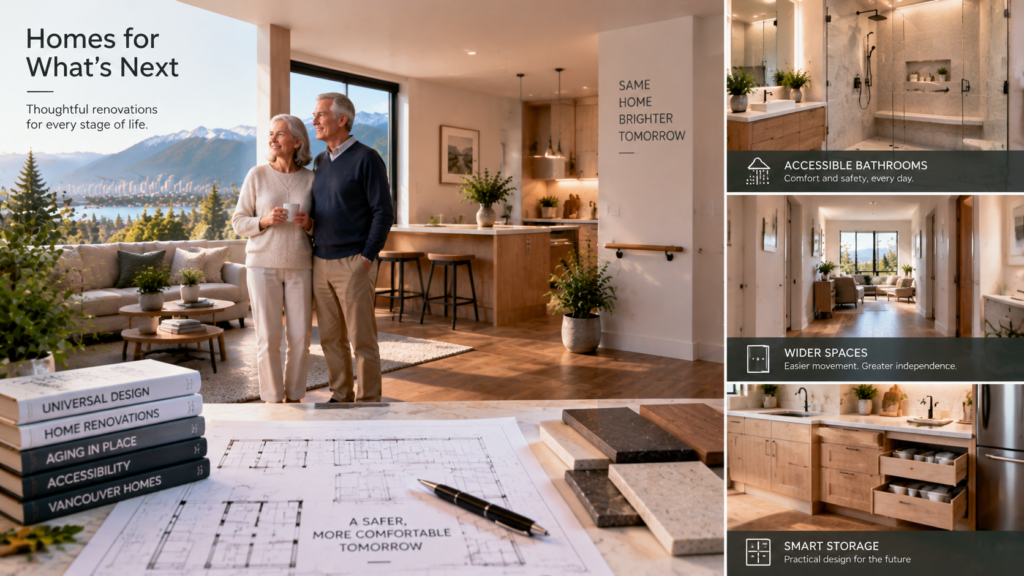
Aging in Place Renovations Vancouver: Designing Homes for the Future
A home should continue working as life changes.
For many Vancouver homeowners, the idea of renovating is no longer only about creating a more modern appearance. It is about making the home safer, easier to maintain, and comfortable for different stages of life.
Aging-in-place renovations in Vancouver focus on creating homes that support changing mobility, comfort, and lifestyle needs without sacrificing modern design. These improvements can include accessible bathrooms, safer flooring, better lighting, wider pathways, improved storage, and flexible layouts that benefit homeowners of all ages.
The goal is not to design a home only for seniors.
The goal is to design a home that remains practical for the future.
What Are Aging-in-Place Renovations?
Aging-in-place renovations are home improvements designed to help people continue living safely and comfortably in their existing homes as their needs change over time. These renovations focus on accessibility, convenience, safety, and long-term usability.
A future-ready home considers:
- Easier movement
- Reduced safety risks
- Better lighting
- Comfortable bathrooms
- Functional layouts
- Lower maintenance requirements
A good aging-in-place design should feel natural.
It should not look like a medical facility.
Why Vancouver Homeowners Are Planning Future-Proof Renovations
Many Vancouver homeowners are choosing future-focused renovations because staying in a familiar neighbourhood can be valuable. Instead of waiting until a mobility challenge appears, homeowners are improving their spaces proactively.
Common reasons include:
- Remaining in the same community
- Improving everyday comfort
- Preparing for changing family needs
- Supporting multi-generational living
- Increasing long-term home usability
A renovation completed today can make the home easier to enjoy for many years.
Aging in Place Does Not Mean Sacrificing Design
Modern accessible home design focuses on combining safety features with attractive finishes, thoughtful layouts, and comfortable spaces. Many accessibility upgrades can be integrated into contemporary renovations without making the home feel different from a standard modern design.
Examples include:
- Walk-in showers
- Elegant grab bar solutions
- Better lighting
- Wider doorways
- Slip-resistant flooring
- Comfortable bathroom layouts
The best designs solve practical problems quietly.
Accessible Bathroom Renovations Vancouver: Where Function Matters Most
Bathrooms are one of the most important areas for aging-in-place renovations because they involve water, movement, and daily routines. Accessible bathroom renovations focus on reducing hazards while improving comfort and usability.
A well-designed bathroom can benefit:
- Older homeowners
- Families with children
- Guests
- Anyone recovering from injury
- Future mobility needs
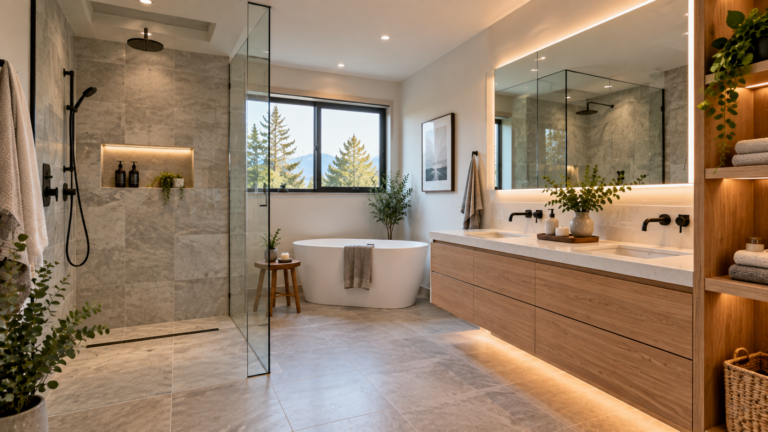
1. Curbless Walk-In Showers
A curbless shower removes the traditional raised shower edge, creating easier access and a cleaner modern appearance. Proper planning is required because drainage, waterproofing, and floor slope must be designed correctly.
Benefits include:
- Easier entry
- Improved accessibility
- Modern appearance
- Easier cleaning
Construction considerations:
- Waterproofing system
- Drain placement
- Floor preparation
- Tile installation
A shower should be designed around the user, not just the available space.
2. Shower Seating and Comfort Features
Built-in shower seating can improve comfort and safety while also creating a more relaxing bathroom experience.
Possible features include:
- Built-in benches
- Handheld shower controls
- Adjustable shower heads
- Recessed storage niches
These features are useful for many homeowners, not only older adults.
3. Grab Bar Preparation and Installation
Grab bars are one of the most practical accessibility features, but their installation requires proper planning. They need secure structural support behind the wall rather than simple surface mounting.
Good planning considers:
- Location
- Height
- Wall reinforcement
- Overall bathroom design
A bathroom renovation is the best time to prepare these areas.
4. Improved Bathroom Lighting
Good lighting can improve visibility, comfort, and safety. Bathroom lighting should reduce shadows and make important areas easy to use.
Consider:
- Vanity lighting
- Motion-activated lighting
- Shower lighting
- Night lighting
Lighting is a small detail that can make a major difference.
5. Comfortable Vanity and Storage Design
Accessible bathroom design also considers how easily homeowners can use storage, sinks, and fixtures every day.
Helpful features include:
- Easy-access drawers
- Comfortable counter heights
- Clear floor space
- Organized storage
A beautiful vanity that is difficult to use is not a successful design.
Home Renovation Features That Support Aging in Place
Aging-in-place planning extends beyond bathrooms. The entire home should be considered as one connected living environment.
1. Wider Doorways and Better Circulation
Improving movement through the home can make daily activities easier and create a more comfortable layout for everyone.
Consider:
- Wider interior openings
- Clear walking paths
- Reduced obstacles
- Better furniture placement
2. Safer Flooring Choices
Flooring selection plays an important role in comfort and safety. The right flooring should balance appearance, durability, maintenance, and slip resistance.
Consider:
- Stable walking surfaces
- Reduced transition heights
- Durable materials
- Easy maintenance
3. Better Entrance Design
The entrance is one of the first areas homeowners and visitors interact with. A practical entry design improves convenience and everyday use.
Possible improvements:
- Better lighting
- Easier door operation
- Covered entry areas
- Improved pathways
4. Kitchen Improvements for Long-Term Comfort
Kitchen renovations can also support future needs through better organization, easier access, and improved workflow.
Helpful features include:
- Pull-out drawers
- Accessible storage
- Efficient appliance placement
- Better lighting
A kitchen designed well today can continue serving the household in the future.
Future-Proof Home Design: Planning Beyond Today
Future-proof design means creating a home that can adapt as lifestyles change. It focuses on flexibility rather than designing only for one specific stage of life.
Examples include:
- A home office that can become a bedroom
- A bathroom designed for different mobility needs
- Flexible living spaces
- Improved storage
A flexible home gives homeowners more options.
Aging-in-Place Renovation Ideas for Vancouver Homes
Upgrade | Benefit | Suitable For |
| Curbless Shower | Easier bathroom access | All ages |
| Better Lighting | Improved visibility | Every room |
| Wider Doorways | Easier movement | Long-term planning |
| Smart Storage | Better organization | Daily comfort |
| Improved Flooring | Safer movement | Family households |
| Flexible Rooms | Future adaptability | Changing lifestyles |
Accessibility and Home Value
Accessibility improvements can also make homes more appealing because they create practical spaces that support a wider range of homeowners and future buyers.
Features that may improve appeal include:
- Modern bathrooms
- Functional layouts
- Quality renovations
- Comfortable living spaces
The strongest improvements are usually the ones that combine comfort and practicality.
Common Aging-in-Place Renovation Mistakes
Mistake 1: Waiting Until a Problem Appears
Planning earlier often creates more design options.
Mistake 2: Focusing Only on Safety Features
A successful renovation should also consider:
- Appearance
- Comfort
- Lifestyle
- Daily routines
Mistake 3: Ignoring Bathroom Construction Details
Accessibility features only work properly when supported by:
- Proper waterproofing
- Correct installation
- Strong structural planning
Mistake 4: Designing for One Person Only
A future-ready home should support different users and changing needs.
Mistake 5: Forgetting About Lighting
Poor visibility can affect comfort throughout the home.
The Aging-in-Place Renovation Process
A successful future-ready renovation begins with understanding how the homeowner uses the space today and what may be needed later.
Step 1: Evaluate the Existing Home
Review:
- Layout
- Bathroom design
- Entry areas
- Flooring
- Lighting
- Storage
Step 2: Identify Future Needs
Consider:
- Mobility changes
- Family changes
- Lifestyle changes
- Comfort improvements
Step 3: Create a Renovation Plan
Prioritize:
- High-impact improvements
- Safety upgrades
- Functional changes
- Design preferences
Step 4: Complete Construction
Work may include:
- Bathroom renovation
- Flooring upgrades
- Lighting improvements
- Layout changes
- Storage solutions
Step 5: Final Review
Ensure the renovated home feels:
- Comfortable
- Practical
- Attractive
- Easy to use
How Walker General Contractors Approaches Aging-in-Place Renovations
Walker General Contractors helps Vancouver homeowners create renovations that improve comfort, functionality, and long-term usability. Aging-in-place features can be incorporated into modern bathroom renovations, home improvements, and custom renovation projects.
The focus is on creating homes that work better through:
- Thoughtful design
- Quality construction
- Practical solutions
- Clear planning
A future-ready home does not need to look different.
It simply needs to work better.
Frequently Asked Questions
What is aging-in-place renovation?
Aging-in-place renovation involves modifying a home to improve safety, comfort, and usability as homeowners’ needs change over time.
Are aging-in-place renovations only for seniors?
No. Many features, such as better lighting, improved bathrooms, and flexible layouts, benefit homeowners of all ages.
What bathroom upgrades help with aging in place?
Common upgrades include curbless showers, improved lighting, grab bar preparation, better storage, and safer flooring.
Can accessibility upgrades look modern?
Yes. Modern accessible design focuses on combining functionality with attractive finishes and contemporary layouts.
When should homeowners consider aging-in-place renovations?
Many homeowners choose to plan these improvements during regular renovations before mobility challenges appear.
Final Thoughts: Build a Home Ready for the Future
A home is a long-term investment.
The best renovations do not only solve today’s problems.
They prepare the home for tomorrow.
Aging-in-place renovations in Vancouver focus on creating spaces that are:
- Safer
- More comfortable
- Easier to use
- Better prepared for change
Whether you are updating a bathroom, renovating a full home, or improving accessibility features, thoughtful planning can help your home continue supporting your lifestyle for years.
Plan Your Future-Ready Renovation With Walker General Contractors
Ready to improve your home’s comfort and functionality?
Walker General Contractors
📍 North Vancouver, BC
📞 604-781-7785
✉️ info@walkergeneralcontractors.ca
Contact Walker General Contractors
From accessible bathroom renovations to complete home improvements, Walker General Contractors helps Vancouver homeowners create practical, comfortable spaces designed for the future.
About the Author: walkergc

Related Posts