
There’s a moment that happens almost every February in North Vancouver when the rain finally stops for a few days. The clouds break apart just enough for actual sunlight to hit the mountains, and suddenly you realize how dark your home has been for months. That’s when people call us.
Living in Vancouver means something most people don’t talk about openly: we don’t get a lot of natural light. The grey, overcast days are beautiful in their own way, but they also mean our homes can feel perpetually dim. Squamish gets more cloud cover. Deep Cove has the mountains blocking afternoon light. West Vancouver homes often sit in tree shadows. Lynn Valley gets surprising darkness despite being relatively open. Even downtown Vancouver’s high-rises can create shadow zones.
We’re Kyle from Walker General Contractors, and we’ve spent twenty years helping Vancouver families solve this exact problem. Not with more lamps or brighter paint (though both help). But with real structural changes that fundamentally transform how light moves through their homes.
Here’s what we’ve learned: improving natural light in Vancouver is different than improving natural light anywhere else. You can’t just throw in skylights and call it done. You need to understand our specific climate, our unique geography, and the actual behavior of light in the Pacific Northwest.
Why Natural Light Actually Matters (It’s Not Just Aesthetics)
Before we get into the how, let’s talk about the why. Because natural light isn’t a luxury feature. It’s a health issue.
Studies consistently show that natural light affects your mood, your sleep quality, your vitamin D production, and your energy levels. Vancouver’s grey climate already puts us at a disadvantage. If your home is dark on top of that, you’re essentially living in permanent dusk.
We had a client in Cypress who described her kitchen as “the place where sadness lives.” That’s a real quote from a consultation. Her home faced north, had small windows, and was surrounded by large trees. The result? A perpetually dim kitchen that made morning coffee feel depressing rather than energizing.
After we made changes—which I’ll detail below—she told us it was like someone had turned up the brightness on her entire life. That’s not hyperbole. The science backs it up.
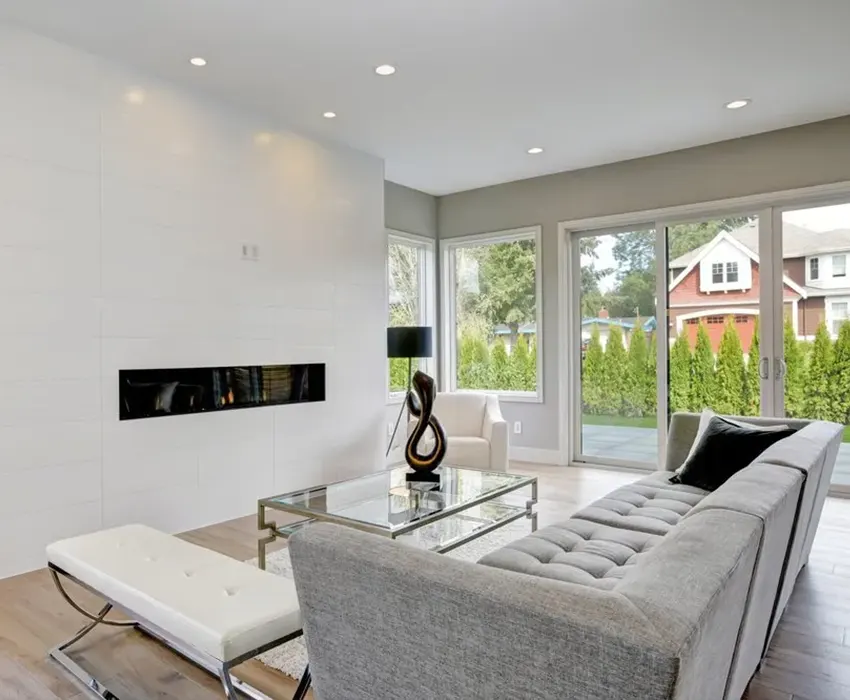
Understanding Vancouver’s Light Challenge (It’s More Complex Than You Think)
Most light improvement advice assumes a normal climate with consistent sun angles. Vancouver doesn’t work that way.
Our sun sits lower in the sky than most North American cities. From December through February, the sun barely climbs above the horizon. South-facing windows get decent light during these months, but north and west-facing windows get almost nothing. By June, the sun is so high that south-facing windows actually get shaded by roof overhangs.
Then there’s the rain. We average 160 rainy days per year in Vancouver—more than Seattle, more than Portland. Even on “cloudy” days, the cloud cover is often thick enough to reduce usable light by 40-50%.
The geography adds another layer. Mountains surrounding North Shore neighborhoods block early morning and late afternoon light. Large trees that thrive in our moist climate can block surprising amounts of light. West Vancouver homes often deal with afternoon shadow from higher elevations. Deep Cove’s water reflection actually helps some homes, but also creates glare issues.
What this means practically: a solution that works for a south-facing home in Kitsilano won’t necessarily work for a north-facing home in Lynn Valley. This is why generic light improvement advice fails in Vancouver.
The Real Options for Bringing More Light Into Your Vancouver Home
We’ve worked on hundreds of light improvement projects across Greater Vancouver. Here’s what actually works in our climate.
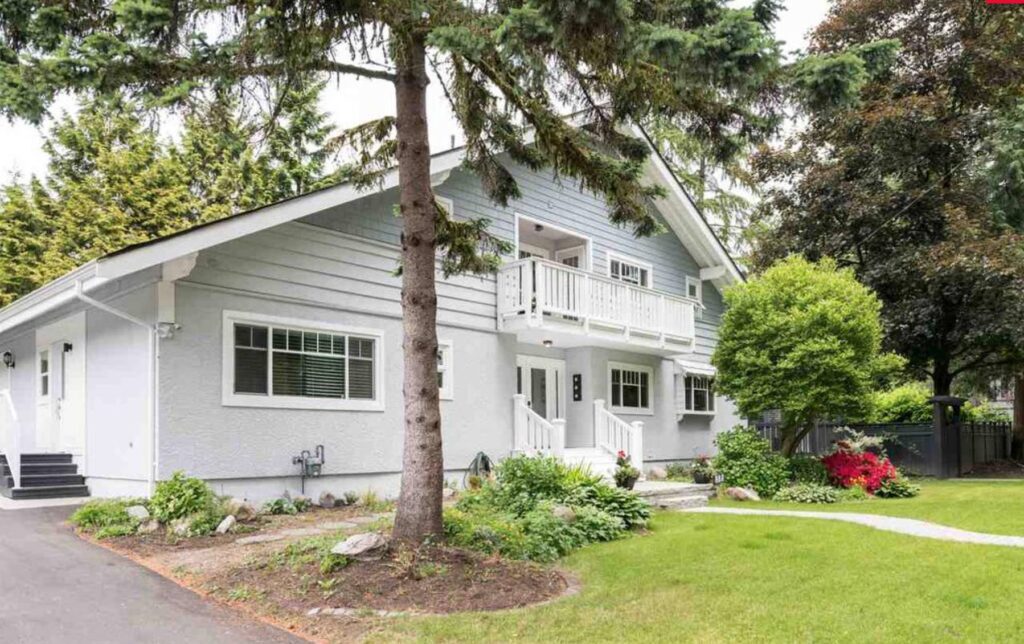
Option One: Window Optimization (The Most Accessible Solution)
Before you renovate, start here. Window optimization means making your existing windows work harder.
Clean them obsessively. This sounds obvious, but dirty windows reduce light penetration by 20-30%. In Vancouver’s rainy climate where windows accumulate mineral deposits and algae, this matters significantly. We recommend professional cleaning quarterly.
Remove obstacles. Look at what’s blocking light from reaching your windows. Tree branches? Trim them (carefully—Vancouver has specific tree regulations). Heavy curtains? Switch to sheer ones that filter light without blocking it. Furniture positioned against windows? Move it.
Upgrade to high-performance glass. This is the one renovation-level change we recommend before bigger projects. Modern low-E glass (low-emissivity) lets in more light while improving thermal performance. In Vancouver’s climate where you’re heating most of the year, this is a smart investment. Expect $3,000-8,000 for whole-home window upgrades, but you’re also improving insulation.
Add transom windows. If you can’t enlarge existing windows, add smaller windows above doors or in high wall spaces. In a North Vancouver home we worked on, adding transoms above two doorways transformed the light quality without major structural changes. Cost: $1,200-3,000 per opening.
This approach works best for homes where the basic structure is sound but underutilized.
Option Two: Skylights (The Nuanced Choice)
Every Vancouver homeowner eventually thinks about skylights. The idea is intuitive: more roof area, more light. But skylights in Vancouver require careful consideration.
The advantage: Skylights capture light from high in the sky, avoiding the ground-level obstacles that block other windows. On Vancouver’s rare clear days, they’re incredibly effective.
The challenge: They create thermal issues in our climate. During winter, they’re massive heat loss points. During summer, they can cause unwanted heat gain. They also require annual maintenance due to debris and algae accumulation.
The solution: Modern skylights with thermal breaks, argon gas fill, and smart placement make them viable in Vancouver. We’ve had excellent results with skylights placed on south or southeast-facing roof sections, combined with thermal shutters or cellular shades.
Cost: $2,500-6,000 per unit installed. Our advice? Use skylights strategically—one or two in key areas—rather than multiple skylights throughout the home.
We recently installed a skylight in a West Vancouver master bedroom that faced east. The morning light flooding through that single skylight transformed the space. The key was correct placement based on actual sun angles in our latitude.
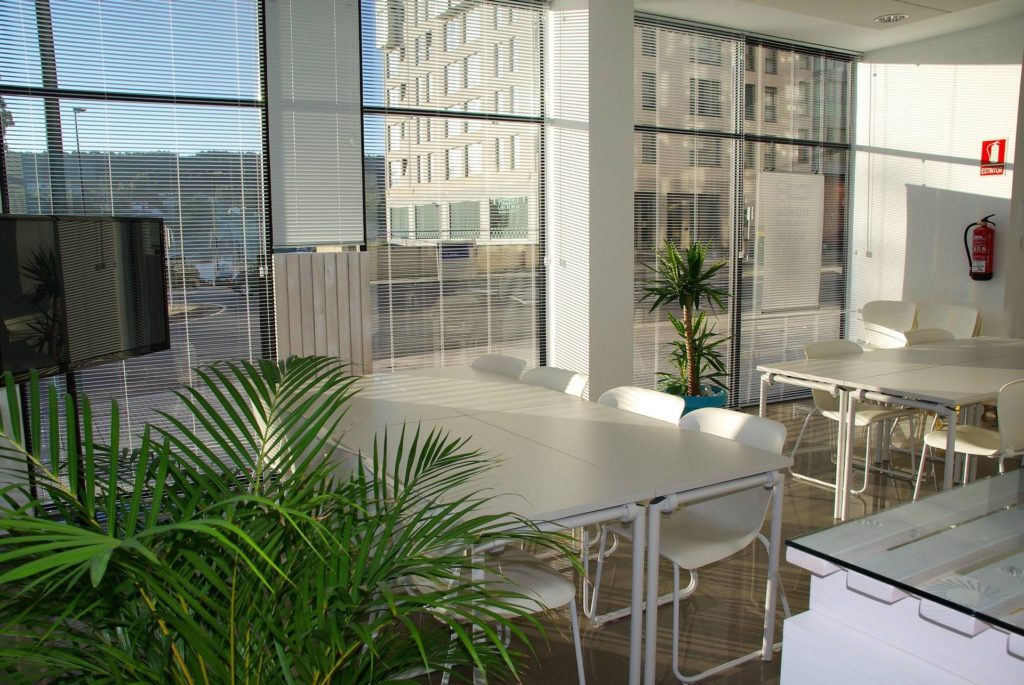
Option Three: Light Wells and Reflective Surfaces (The Underused Solution)
This is where creativity meets physics. A light well is essentially a reflective tube that channels light from roof or high windows down into darker interior spaces.
Light wells work brilliantly in Vancouver because they don’t rely on direct sunlight—they work with diffuse light. Even on cloudy days, a properly designed light well significantly brightens spaces that would otherwise be permanently dim.
We installed a light well in a Deep Cove home’s central hallway. The hallway was windowless and dark. A light well running from the roof down to the hallway ceiling cost $4,500 and transformed the space from “cave” to “bright corridor.”
The science: light wells use highly reflective surfaces (98% reflective aluminum) to bounce ambient light downward. Because they work with diffuse light rather than direct sun, Vancouver’s cloudy climate actually isn’t a disadvantage.
Paired with reflective surfaces: Paint walls in light colors (whites, soft creams, pale blues). Install reflective tiles or mirrors strategically. Use high-gloss finishes on some surfaces. These design choices multiply the effectiveness of whatever light you do get.
Option Four: Structural Changes (The Comprehensive Solution)
When windows, skylights, and light wells aren’t enough, you modify the structure.
Expanding window openings: Enlarging existing windows or creating new ones. In Vancouver homes, we often find that original window sizes are smaller than modern homes use. Enlarging windows requires structural assessment but is frequently possible.
Cost: $5,000-12,000 per window enlargement depending on structural requirements.
Removing walls: An interior wall blocking light to a key room? Sometimes removing or partially removing it (with proper structural support) solves the problem. We recently opened up a wall between a dark kitchen and dim dining room in a Squamish home. The light improvement was dramatic.
Cost: $8,000-20,000 depending on whether the wall was load-bearing.
Sliding glass doors to exterior spaces: Converting a solid door to sliding glass, or adding new glass doors to patios or decks, brings significant light into adjacent interior spaces.
Cost: $3,000-7,000 depending on door type and installation complexity.
We worked with a North Shore family whose living room faced a patio but had only a small window. We installed floor-to-ceiling sliding glass doors opening to the patio. The light improvement was transformative, and they also gained functional outdoor space.
The Vancouver-Specific Optimization Strategy
Here’s what we’ve learned works specifically in our geography and climate:
For North-Facing Homes: Don’t fight north light. Embrace it. North light is soft and even but cool. Use skylights or light wells for supplemental brightness. Paint surfaces in warmer whites to counteract the cool tone.
For South-Facing Homes: You have the advantage but need thermal control. Use skylights with thermal shutters. Consider overhangs or exterior shades to manage summer heat while capturing winter light.
For Homes Surrounded by Trees: Selective pruning is your first step (get an arborist, not a random tree trimmer). Consider limbing up lower branches to let light pass underneath. In some cases, removing strategic trees opens dramatic light improvement, but consult Vancouver’s tree protection regulations first.
For Shaded Neighborhoods: Reflective surfaces become critical. Light wells and skylights often outperform traditional windows. East or west-facing glass doors can capture side light when overhead light is limited.
For Deep Cove and Water-Adjacent Homes: Water reflection is your secret advantage. Position glass to take advantage of reflected light from water surfaces. This often provides surprisingly effective supplemental light.

Real Light Transformation Stories (This Is What Actually Happens)
Let me share specific projects because that’s where reality lives.
The Lynn Valley Kitchen That Went From Dark to Radiant:
This north-facing kitchen was a contractors nightmare. Small windows, dark cabinets, enclosed space. The homeowner had basically given up on natural light and invested in excellent artificial lighting.
We didn’t renovate the kitchen structure. Instead, we: removed a non-structural wall to the adjacent dining room (which had a south-facing window), upgraded to larger high-performance windows, added a light well above the pass-through, installed reflective white subway tile backsplash, and painted in warm white.
Cost: $11,000 total. The result? A kitchen that feels bright and open without losing any functionality.
The Squamish Home Where Skylights Actually Worked:
This south-facing bedroom got afternoon heat but weak morning light. We added one skylight on the southeast roof section with a motorized shade for thermal control. The homeowner can open the shade for light and close it when needed for heat management.
Cost: $4,200 installed. She told us it’s the best change they made in ten years of owning the home.
The West Vancouver Master Suite That Embraced East Light:
Rather than fighting the afternoon shadow, we added floor-to-ceiling glass doors on the east side of the home, opening to a patio that got early morning sun. The morning light flooding through those doors transformed the space.
Cost: $6,800. Now they wake up to natural light streaming in rather than waking to darkness.
The Real Cost of Natural Light Improvement
Let’s be honest about money, because this matters.
Small changes (window cleaning, trimming trees, upgrading existing windows): $0-3,000
Medium changes (adding transoms, one skylight, a light well): $4,000-10,000
Structural changes (enlarging windows, removing walls, adding doors): $8,000-20,000
Major renovations (complete reorientation toward light with multiple systems): $25,000+
Here’s what we’ve learned: the medium range ($4,000-10,000) delivers the best return on investment in Vancouver. You’re making genuine structural or systems improvements without the cost of major renovation.
Questions We Get Asked Constantly
“Will skylights leak in Vancouver?”
Modern skylights with proper installation don’t leak. The key is quality installation and regular maintenance. We use brands that perform in our climate and include proper flashing and drainage.
“Can we get enough light to eliminate artificial lighting?”
Realistically? No. Vancouver’s climate means you’ll always rely on artificial light during winter months. The goal is reducing artificial light dependence, not eliminating it.
“Will tree removal really help?”
Often yes, but selectively. We always recommend getting an arborist assessment rather than just clearing trees. Sometimes removing one large tree opens light dramatically. Sometimes the relationship between trees and light is more complex.
“What’s the fastest way to improve light?”
Window cleaning and obstacle removal give immediate results (free to $500). A light well or skylight gives the biggest improvement per dollar spent. Structural changes take longer but deliver the most dramatic transformation.
“Will this improve our home’s value?”
Absolutely. Homes with excellent natural light sell faster and at higher prices in Vancouver’s market. Buyers notice and care about light quality significantly.
The Bottom Line About Natural Light in Vancouver
Our climate is beautiful and challenging. The rain, the mountains, the trees—they’re part of what makes Vancouver home. But they also mean natural light requires thoughtful strategy, not generic solutions.
The best light improvement plan starts with understanding your specific home’s orientation, neighboring geography, and actual light patterns throughout the day. Then it combines multiple strategies—some free, some inexpensive, some requiring structural investment—to work with Vancouver’s unique conditions rather than against them.
If you’re thinking about improving natural light in your Vancouver, North Shore, or Squamish home, we’d love to help you think through options. Not to immediately suggest expensive renovations, but to identify what would actually transform your experience of your home.
Because living in Vancouver shouldn’t mean living in darkness half the year.
Walker General Contractors Phone: 604.781.7785 Email: kyle@walkergeneralcontractors.ca Location: 1330 Marine Dr #409, North Vancouver, BC V7P 1T4, Canada
We’ve helped 300+ Vancouver families bring natural light into their homes. Let’s figure out what would work for yours.
